Blog
/
A Good First Impression: A Complete Guide to Branded Podcast Intros

A Good First Impression: A Complete Guide to Branded Podcast Intros

Learn how to craft compelling branded podcast intros that capture attention, spark curiosity, and keep listeners engaged from the start.
February 11, 2026
Contents

When someone presses play on a new podcast, they’re not settling in for the long haul. They’re sampling and quietly accessing: is this worth my time?

You might get a minute. You might get thirty seconds. Sometimes you get less than that. Listeners are scanning for signals that say this show is sharp, relevant, and intentionally made for them. If those signals don’t show up quickly, they don’t hang around to see if it gets better.

This is where a lot of branded podcasts misread the room. There’s often an assumption that familiarity will do the heavy lifting — that an existing audience, brand recognition, or industry credibility will carry people through the opening. But attention doesn’t transfer just because a logo does. Every episode has to earn its place in someone’s day, from the very first beat.

And here’s the part that stings a little: listeners aren’t just comparing your show to other branded podcasts. They’re comparing it to everything else they could be doing instead:

  • A binge-worthy series
  • A creator they already trust
  • A book they’ve been meaning to finish. 
  • Replying to memes in the group chat

When the opening feels safe, predictable, or overly polished, people sense it immediately. It reads as low-risk (and therefore low-reward). So they leave. Not because the content is terrible, but because it hasn’t proven it’s worth staying for.

The shows that hold attention make it clear, quickly, what’s interesting here, what’s different, and what the listener will walk away with if they keep going. It’s the result of knowing exactly who you’re making the show for and designing the opening with their curiosity in mind.

Before we get into how to do that well, it’s worth being honest about what’s causing the audience drop-off in the first place.

Where most podcast intros fall flat

Here’s an uncomfortable truth: most branded podcast intros aren’t bad because they’re trying to sell something. They’re bad because they forget there’s a human on the other side of the headphones.

Do a quick experiment. Drop into the first two minutes of a few random shows. What you’ll often get is a wall of ads, followed by some loose, meandering chatter that never quite explains why you should stick around. Then comes the familiar routine: the same generic opener you’ve heard every episode, capped off with a guest bio that sounds like it was copied straight from LinkedIn. Still no clue what this episode is actually about, or why it matters to you.

This is where listeners quietly disappear. Attention is scarce. If the intro doesn’t signal value quickly and clearly, people move on. 

The irony? Branded podcasts are often the worst offenders. In an effort to sound “polished” or “on brand,” intros become bloated, predictable, and strangely anonymous. They tell you who the company is, who the guest is, and how long the show has existed, but not what you’ll learn, feel, or think differently in the next 30 minutes.

Great intros do the opposite. They respect the listener’s time. They orient you fast. They make a promise, and give you a reason to believe it’s worth sticking around.

Branded podcast introduction strategies that work

Now that you understand the value of listener attention, why the first few moments of your branded podcast matter so much, and where most corporate podcast intros fall flat, let’s dive into the strategies that work:

The cold open

Instead of easing listeners in with branding, context, or housekeeping, a cold open throws them straight into the action. A moment mid-conversation. A line of dialogue that raises eyebrows. A story already unfolding. You don’t yet know who these people are or why this moment matters, but you can feel that it does. And that’s enough to keep listening.

This tactic works because it mirrors how attention actually functions. Humans are wired to notice motion, tension, and unresolved situations. When something is already happening, the brain leans forward instinctively. It wants to catch up. A cold open creates that forward pull by starting in the middle rather than the beginning.

In branded podcasts, this approach is especially powerful because it works against the instinct to explain first. Brands often feel compelled to orient the listener immediately: 

  • Who the show is for
  • Who’s hosting
  • Who’s sponsoring it
  • Why it exists

The cold open flips that entirely.

That doesn’t mean skipping structure altogether, it means reordering it. After the cold open does its work (after the listener is hooked), you can reset. Roll the theme music. Introduce the host. Explain what the show is about. At that point, the listener is more invested.

The mistake many teams make is confusing “professional” with “linear.” They assume the episode must begin at the beginning. But some of the most compelling storytelling across film, television, books, and journalism deliberately avoids that. It starts with the most gripping moment available, then rewinds to show you how you got there.

For branded podcasts, cold opens are particularly effective when they highlight a moment of genuine tension or insight: a guest challenging a widely held belief, a surprising outcome of a business decision, a candid admission that reframes the conversation. These are moments brands often bury deep in the episode, even though they’re the most compelling material they have.

The cold open in action

This episode of The Good Clean Nutrition Podcast is a great example of a cold open because it drops the listener directly into the emotional and intellectual core of the conversation. Rather than starting with credentials, definitions, or a broad setup about nutrition, the intro centers on a provocative idea already in motion: that eating behaviors are shaped less by willpower and more by mental health, trauma, and lived experience.

The counterintuitive thesis

One of the fastest ways to lose a listener is to confirm exactly what they already believe. One of the fastest ways to keep them is to challenge it.

A counterintuitive thesis works by disrupting mental autopilot. Instead of opening with a familiar framing, it introduces an idea that feels slightly off or wrong based on conventional wisdom. That friction creates curiosity. The listener doesn’t just want to know what you think. They want to know why.

This tactic is especially effective in branded podcasts because brands often sit inside industries filled with assumptions:

  • “Best practices”
  • “Proven frameworks” 
  • “What everyone knows” 

A counterintuitive opening signals immediately that this won’t be a recap of the obvious.

This works because humans are pattern-seeking creatures. When something breaks the pattern, it demands attention. If every other podcast in your category opens by reinforcing the same worldview, the one that challenges it stands out immediately.

For brands, this approach also builds credibility quickly. It signals confidence. You’re not hedging. You’re not hiding behind neutrality. You’re saying: we’ve thought deeply about this, and we’re willing to articulate a point of view. That’s compelling, even for listeners who ultimately disagree.

The counterintuitive thesis in action

The folks at Freakonomics are great practitioners of the counterintuitive thesis.

For example, this episode, called “If you’re not cheating, you’re not trying,” opens with a statement that immediately runs against deeply held beliefs. 

By reframing cheating as a rational response to broken or inconsistently enforced rules, the episode invites a deeper examination of incentives, systems, and human behavior. That single, counterintuitive idea becomes the lens for everything that follows, from performance-enhancing drugs to broader cultural attitudes about rule-breaking. This is exactly why the counterintuitive thesis works so well: it signals confidence, point of view, and depth from the very first moment. 
Controversial questions or statements 

Questions are powerful because they bring the listener into the experience. The moment you ask a good one, the listener starts answering it, consciously or not. That mental participation keeps people listening.

But not all questions earn that response. The ones that work tap into a real tension: uncertainty, fear, curiosity, or disagreement. The most effective questions are specific; they zoom in on decisions, behaviors, or beliefs the listener encounters in real life. They also imply that the answer isn’t simple. If it were, the episode wouldn’t need to exist.

For brands, this approach is particularly useful when navigating complex or nuanced topics. A well-crafted question can invite exploration without sounding preachy or prescriptive. It positions the brand as curious and thoughtful rather than authoritative by default.

When done right, a provocative question doesn’t just hook attention; it frames the entire episode. Everything that follows feels like part of the answer, which gives the listener a reason to stay engaged until the end.

Controversial statements in action

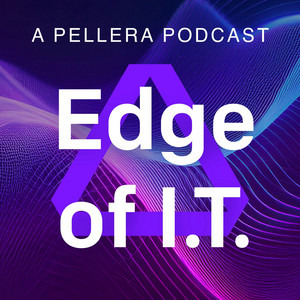
This episode of Edge of IT by Pellera opens by leading with a question almost every organization grappling with AI has either asked out loud or quietly avoided: “Where’s my return on AI?” 

It challenges the narrative that AI adoption naturally leads to results, and instead acknowledges a shared frustration: teams were promised impact, yet many are still struggling to show it. Everything that follows, like model drift, hallucinations, Shadow AI, and the risks of “vibe coding,” feels like part of a deeper, more honest answer to why ROI has been so elusive.
The promise of value 

Not every great intro needs suspense or surprise. Sometimes the most respectful thing you can do for a listener is tell them, clearly and honestly, what they’re about to get.

This approach works particularly well for branded podcasts because value is often the reason they exist in the first place. The mistake brands make is assuming that value will be obvious once the conversation unfolds. But in the opening moments, clarity beats subtlety.

A good value-driven intro is specific. It doesn’t promise to “explore,” or “discuss,” or “dive into.” It tells the listener what they will learn, understand, or be able to do differently by the end of the episode. This doesn’t mean sounding instructional or stiff. The promise should feel grounded and human, not like a syllabus. The goal here is to help the listener quickly decide that the payoff is worth the investment.

Value-driven openings are especially effective when the topic itself isn’t flashy. If you’re covering something practical, technical, or nuanced, leading with a clear benefit helps the listener orient themselves. It sets expectations and reduces friction.

The key is alignment. The value you promise at the beginning must show up throughout the episode, not just at the end. When listeners feel that an episode delivered exactly what it said it would, trust compounds over time.

The promise of value in action

The episode ”Rewriting Menopause Care” for the podcast Smart Medicine by Veradigm is a strong example of what a value-driven intro looks like in practice. From the first moments, it clearly tells the listener why this conversation matters and what they’ll walk away understanding. 

By reframing menopause as something to get right, not just endure, the intro establishes a concrete promise: clearer insight into what’s actually happening in women’s bodies during menopause and practical ways to respond. 

Questions to ask yourself when crafting your branded podcast intro

If your branded podcast openings tend to default to habit or autopilot, use the prompts below to rethink how you’re earning attention in those first critical moments:

  • Are your openings driven by habit or by intention? Listen back to your most recent episodes and be brutally honest. Do the first 30–60 seconds sound interchangeable with any other show in your category? If you stripped away the music and branding, would a listener know why this episode is worth their time right now?
  • What’s the most compelling moment you’re hiding later in the episode? Scan the conversation for a moment of tension, surprise, or insight and consider leading with it. Is there a story, a strong opinion, or an unexpected outcome that could function as a cold open?
  • How can you create curiosity without overexplaining? Look for opportunities to raise questions without rushing to answer them. Can you reference a problem, contradiction, or surprising outcome early on and let the explanation unfold naturally over the episode?
  • What questions would you want answered if you were the listener? Put yourself on the other side of the headphones. What would make you lean in? What would make you think: I need to hear how this plays out?
  • What clear value are you offering? If the listener stayed until the end of the episode, what would they gain? A new perspective, a practical takeaway, a deeper understanding of a problem? Make that promise early and specific enough that it feels worth the time investment.

The art (and science) of first impressions 

At the end of the day, a branded podcast intro is just another first impression. And like any first impression, it’s fleeting. 

You rarely get a second chance to earn someone’s attention, so those first 30–60 seconds have to do more than sound “polished” or “professional.” They need to signal value, spark curiosity, and establish trust immediately. Every choice, from tone to structure to content. matters in showing listeners that their time will be rewarded.

The truth is, audiences are savvy. They’re not just deciding if your episode is interesting; they’re weighing it against everything else they could be doing. That means safe, predictable intros won’t cut it. The intros that resonate, that keep listeners past the sampler stage, are intentional, bold, and human. 

They either drop people straight into an engaging story, challenge assumptions with a fresh point of view, pose a question worth exploring, or make a clear promise of value that sets expectations from the outset. The common thread? They respect the listener’s time and intelligence.

Crafting strong intros is as much about mindset as it is about technique. It requires stepping back and asking hard questions: 

  • Are we starting with the most compelling material we have? 
  • Are we creating curiosity rather than delivering filler? 
  • Are we making it clear why this episode is worth sticking with? 

Thinking like a listener, rather than a marketer, helps ensure every second earns attention. 

Finally, remember that a great intro doesn’t exist in isolation. It sets the tone for the entire episode and the perception of your brand as a whole. When listeners feel oriented, intrigued, and promised something meaningful right from the start, they’re more likely to engage deeply, share with others, and return for more. 

For more branded podcast tips like these, join the community of marketers who subscribe to our bi-weekly newsletter, The Branded Podcaster.

Share

About the author

Tianna Marinucci is a content creation and digital marketing specialist. She graduated from McGill University in 2021 and has since worked in a variety of industries from interior design to technology.

After traveling to more than 60 countries and working in three, she is inspired by diverse cultures and motivated by unique experiences.

In her spare time, Tianna loves trying new foods, going to concerts, and learning more about history and socio-economics through books and podcasts.

More Like This

Branded Podcasts

A Good First Impression: A Complete Guide to Branded Podcast Intros

Last updated on: 
February 11, 2026

Learn how to craft compelling branded podcast intros that capture attention, spark curiosity, and keep listeners engaged from the start.

When someone presses play on a new podcast, they’re not settling in for the long haul. They’re sampling and quietly accessing: is this worth my time?

You might get a minute. You might get thirty seconds. Sometimes you get less than that. Listeners are scanning for signals that say this show is sharp, relevant, and intentionally made for them. If those signals don’t show up quickly, they don’t hang around to see if it gets better.

This is where a lot of branded podcasts misread the room. There’s often an assumption that familiarity will do the heavy lifting — that an existing audience, brand recognition, or industry credibility will carry people through the opening. But attention doesn’t transfer just because a logo does. Every episode has to earn its place in someone’s day, from the very first beat.

And here’s the part that stings a little: listeners aren’t just comparing your show to other branded podcasts. They’re comparing it to everything else they could be doing instead:

  • A binge-worthy series
  • A creator they already trust
  • A book they’ve been meaning to finish. 
  • Replying to memes in the group chat

When the opening feels safe, predictable, or overly polished, people sense it immediately. It reads as low-risk (and therefore low-reward). So they leave. Not because the content is terrible, but because it hasn’t proven it’s worth staying for.

The shows that hold attention make it clear, quickly, what’s interesting here, what’s different, and what the listener will walk away with if they keep going. It’s the result of knowing exactly who you’re making the show for and designing the opening with their curiosity in mind.

Before we get into how to do that well, it’s worth being honest about what’s causing the audience drop-off in the first place.

Where most podcast intros fall flat

Here’s an uncomfortable truth: most branded podcast intros aren’t bad because they’re trying to sell something. They’re bad because they forget there’s a human on the other side of the headphones.

Do a quick experiment. Drop into the first two minutes of a few random shows. What you’ll often get is a wall of ads, followed by some loose, meandering chatter that never quite explains why you should stick around. Then comes the familiar routine: the same generic opener you’ve heard every episode, capped off with a guest bio that sounds like it was copied straight from LinkedIn. Still no clue what this episode is actually about, or why it matters to you.

This is where listeners quietly disappear. Attention is scarce. If the intro doesn’t signal value quickly and clearly, people move on. 

The irony? Branded podcasts are often the worst offenders. In an effort to sound “polished” or “on brand,” intros become bloated, predictable, and strangely anonymous. They tell you who the company is, who the guest is, and how long the show has existed, but not what you’ll learn, feel, or think differently in the next 30 minutes.

Great intros do the opposite. They respect the listener’s time. They orient you fast. They make a promise, and give you a reason to believe it’s worth sticking around.

Branded podcast introduction strategies that work

Now that you understand the value of listener attention, why the first few moments of your branded podcast matter so much, and where most corporate podcast intros fall flat, let’s dive into the strategies that work:

The cold open

Instead of easing listeners in with branding, context, or housekeeping, a cold open throws them straight into the action. A moment mid-conversation. A line of dialogue that raises eyebrows. A story already unfolding. You don’t yet know who these people are or why this moment matters, but you can feel that it does. And that’s enough to keep listening.

This tactic works because it mirrors how attention actually functions. Humans are wired to notice motion, tension, and unresolved situations. When something is already happening, the brain leans forward instinctively. It wants to catch up. A cold open creates that forward pull by starting in the middle rather than the beginning.

In branded podcasts, this approach is especially powerful because it works against the instinct to explain first. Brands often feel compelled to orient the listener immediately: 

  • Who the show is for
  • Who’s hosting
  • Who’s sponsoring it
  • Why it exists

The cold open flips that entirely.

That doesn’t mean skipping structure altogether, it means reordering it. After the cold open does its work (after the listener is hooked), you can reset. Roll the theme music. Introduce the host. Explain what the show is about. At that point, the listener is more invested.

The mistake many teams make is confusing “professional” with “linear.” They assume the episode must begin at the beginning. But some of the most compelling storytelling across film, television, books, and journalism deliberately avoids that. It starts with the most gripping moment available, then rewinds to show you how you got there.

For branded podcasts, cold opens are particularly effective when they highlight a moment of genuine tension or insight: a guest challenging a widely held belief, a surprising outcome of a business decision, a candid admission that reframes the conversation. These are moments brands often bury deep in the episode, even though they’re the most compelling material they have.

The cold open in action

This episode of The Good Clean Nutrition Podcast is a great example of a cold open because it drops the listener directly into the emotional and intellectual core of the conversation. Rather than starting with credentials, definitions, or a broad setup about nutrition, the intro centers on a provocative idea already in motion: that eating behaviors are shaped less by willpower and more by mental health, trauma, and lived experience.

The counterintuitive thesis

One of the fastest ways to lose a listener is to confirm exactly what they already believe. One of the fastest ways to keep them is to challenge it.

A counterintuitive thesis works by disrupting mental autopilot. Instead of opening with a familiar framing, it introduces an idea that feels slightly off or wrong based on conventional wisdom. That friction creates curiosity. The listener doesn’t just want to know what you think. They want to know why.

This tactic is especially effective in branded podcasts because brands often sit inside industries filled with assumptions:

  • “Best practices”
  • “Proven frameworks” 
  • “What everyone knows” 

A counterintuitive opening signals immediately that this won’t be a recap of the obvious.

This works because humans are pattern-seeking creatures. When something breaks the pattern, it demands attention. If every other podcast in your category opens by reinforcing the same worldview, the one that challenges it stands out immediately.

For brands, this approach also builds credibility quickly. It signals confidence. You’re not hedging. You’re not hiding behind neutrality. You’re saying: we’ve thought deeply about this, and we’re willing to articulate a point of view. That’s compelling, even for listeners who ultimately disagree.

The counterintuitive thesis in action

The folks at Freakonomics are great practitioners of the counterintuitive thesis.

For example, this episode, called “If you’re not cheating, you’re not trying,” opens with a statement that immediately runs against deeply held beliefs. 

By reframing cheating as a rational response to broken or inconsistently enforced rules, the episode invites a deeper examination of incentives, systems, and human behavior. That single, counterintuitive idea becomes the lens for everything that follows, from performance-enhancing drugs to broader cultural attitudes about rule-breaking. This is exactly why the counterintuitive thesis works so well: it signals confidence, point of view, and depth from the very first moment. 

Controversial questions or statements 

Questions are powerful because they bring the listener into the experience. The moment you ask a good one, the listener starts answering it, consciously or not. That mental participation keeps people listening.

But not all questions earn that response. The ones that work tap into a real tension: uncertainty, fear, curiosity, or disagreement. The most effective questions are specific; they zoom in on decisions, behaviors, or beliefs the listener encounters in real life. They also imply that the answer isn’t simple. If it were, the episode wouldn’t need to exist.

For brands, this approach is particularly useful when navigating complex or nuanced topics. A well-crafted question can invite exploration without sounding preachy or prescriptive. It positions the brand as curious and thoughtful rather than authoritative by default.

When done right, a provocative question doesn’t just hook attention; it frames the entire episode. Everything that follows feels like part of the answer, which gives the listener a reason to stay engaged until the end.

Controversial statements in action

This episode of Edge of IT by Pellera opens by leading with a question almost every organization grappling with AI has either asked out loud or quietly avoided: “Where’s my return on AI?” 

It challenges the narrative that AI adoption naturally leads to results, and instead acknowledges a shared frustration: teams were promised impact, yet many are still struggling to show it. Everything that follows, like model drift, hallucinations, Shadow AI, and the risks of “vibe coding,” feels like part of a deeper, more honest answer to why ROI has been so elusive.

The promise of value 

Not every great intro needs suspense or surprise. Sometimes the most respectful thing you can do for a listener is tell them, clearly and honestly, what they’re about to get.

This approach works particularly well for branded podcasts because value is often the reason they exist in the first place. The mistake brands make is assuming that value will be obvious once the conversation unfolds. But in the opening moments, clarity beats subtlety.

A good value-driven intro is specific. It doesn’t promise to “explore,” or “discuss,” or “dive into.” It tells the listener what they will learn, understand, or be able to do differently by the end of the episode. This doesn’t mean sounding instructional or stiff. The promise should feel grounded and human, not like a syllabus. The goal here is to help the listener quickly decide that the payoff is worth the investment.

Value-driven openings are especially effective when the topic itself isn’t flashy. If you’re covering something practical, technical, or nuanced, leading with a clear benefit helps the listener orient themselves. It sets expectations and reduces friction.

The key is alignment. The value you promise at the beginning must show up throughout the episode, not just at the end. When listeners feel that an episode delivered exactly what it said it would, trust compounds over time.

The promise of value in action

The episode ”Rewriting Menopause Care” for the podcast Smart Medicine by Veradigm is a strong example of what a value-driven intro looks like in practice. From the first moments, it clearly tells the listener why this conversation matters and what they’ll walk away understanding. 

By reframing menopause as something to get right, not just endure, the intro establishes a concrete promise: clearer insight into what’s actually happening in women’s bodies during menopause and practical ways to respond. 

Questions to ask yourself when crafting your branded podcast intro

If your branded podcast openings tend to default to habit or autopilot, use the prompts below to rethink how you’re earning attention in those first critical moments:

  • Are your openings driven by habit or by intention? Listen back to your most recent episodes and be brutally honest. Do the first 30–60 seconds sound interchangeable with any other show in your category? If you stripped away the music and branding, would a listener know why this episode is worth their time right now?
  • What’s the most compelling moment you’re hiding later in the episode? Scan the conversation for a moment of tension, surprise, or insight and consider leading with it. Is there a story, a strong opinion, or an unexpected outcome that could function as a cold open?
  • How can you create curiosity without overexplaining? Look for opportunities to raise questions without rushing to answer them. Can you reference a problem, contradiction, or surprising outcome early on and let the explanation unfold naturally over the episode?
  • What questions would you want answered if you were the listener? Put yourself on the other side of the headphones. What would make you lean in? What would make you think: I need to hear how this plays out?
  • What clear value are you offering? If the listener stayed until the end of the episode, what would they gain? A new perspective, a practical takeaway, a deeper understanding of a problem? Make that promise early and specific enough that it feels worth the time investment.

The art (and science) of first impressions 

At the end of the day, a branded podcast intro is just another first impression. And like any first impression, it’s fleeting. 

You rarely get a second chance to earn someone’s attention, so those first 30–60 seconds have to do more than sound “polished” or “professional.” They need to signal value, spark curiosity, and establish trust immediately. Every choice, from tone to structure to content. matters in showing listeners that their time will be rewarded.

The truth is, audiences are savvy. They’re not just deciding if your episode is interesting; they’re weighing it against everything else they could be doing. That means safe, predictable intros won’t cut it. The intros that resonate, that keep listeners past the sampler stage, are intentional, bold, and human. 

They either drop people straight into an engaging story, challenge assumptions with a fresh point of view, pose a question worth exploring, or make a clear promise of value that sets expectations from the outset. The common thread? They respect the listener’s time and intelligence.

Crafting strong intros is as much about mindset as it is about technique. It requires stepping back and asking hard questions: 

  • Are we starting with the most compelling material we have? 
  • Are we creating curiosity rather than delivering filler? 
  • Are we making it clear why this episode is worth sticking with? 

Thinking like a listener, rather than a marketer, helps ensure every second earns attention. 

Finally, remember that a great intro doesn’t exist in isolation. It sets the tone for the entire episode and the perception of your brand as a whole. When listeners feel oriented, intrigued, and promised something meaningful right from the start, they’re more likely to engage deeply, share with others, and return for more. 

For more branded podcast tips like these, join the community of marketers who subscribe to our bi-weekly newsletter, The Branded Podcaster.

Tianna Marinucci

Content Marketing Specialist

Tianna Marinucci is a content creation and digital marketing specialist. She graduated from McGill University in 2021 and has since worked in a variety of industries from interior design to technology.

After traveling to more than 60 countries and working in three, she is inspired by diverse cultures and motivated by unique experiences.

In her spare time, Tianna loves trying new foods, going to concerts, and learning more about history and socio-economics through books and podcasts.
Platform
Price
Pro’s
Con's
Anchor

Free

  • Easy to use
  • Automatically distributes your podcast to major platforms.
  • Embed media player.
  • Great if podcasting is a
    side hobby
  • Very basic editing
  • Since it’s a free tool, you don’t have full control over the monetization of your podcast.
  • Not the right platform for people taking podcasting seriously
Buzzsprout

Free for 2 hours of content per month

$12 for 3 hours per month

$18+ for 6 hours and up

  • Very user-friendly
  • Caters to both long term and beginner podcasters
  • Advanced analytics
  • Easy distribution of your episodes
  • They measure their size requirements to hours not megabytes
  • Bonus: get a free $20 Amazon gift card when you sign up for any paid hosting plan!
  • Advanced features like dynamic ad insertion need some work
Libsyn

$5/month for Monthly Storage 50mb

  • Oldest podcast hosting site.
  • Easy distribution to major platforms and great for scaling once your podcast gets bigger.
  • Hosted over 35,000 podcasts.
  • An iTunes Podcast partner.
  • Allows you to publish your podcast to specific directories.
  • Embed media player.
  • Price is based on storage
  • 50mb storage for $5 won’t be enough if you are publishing weekly so you’ll end up with a higher price point
Podbean

Unlimited audio package: $9/month

Storage space:

Unlimited

  • Great support & customer service features
  • Unlimited audio.
  • Pages are easy to customize
  • Can schedule podcast release dates.
  • Easy to use.
  • Uploads and changes to podcast titles and/or descriptions are automatic to Spotify.
  • Embed media player.
  • Simple Analytics
  • Analytics aren’t as advanced as other platforms
  • Upload and changes to podcast titles and/or descriptions take a day to change on iTunes.
  • Not an iTunes podcast partner.
  • The process to send a podcast to iTunes is more tedious. But, you will still be able to get on the platform.
Blubrry

Classic

$5/month

Monthly Storage

50mb

  • Podcast Wordpress plugin and management.
  • If you want to record a new introduction or conclusion, add in a sponsored ad or upload a new version of a podcast, it doesn't count towards your storage usage per month.
  • Blubrry allows a 25% storage overage each month
  • Prices are based on storage.
  • Usability is okay.
SimpleCast

Starting: $15/month

Recommendation: $35/month

Monthly Storage: Unlimited

  • Hosts your audio files no matter what the size!
  • Dynamic insertion for podcast ads or edits.
  • Incredibly detailed analytics including number of episodes completed and listener location tracking.
  • Embed media player.
  • Easy to use.
  • Great distribution! Easy access to all major podcast platforms.
  • Customizable podcast
    website.
  • Prices are slightly higher than other platforms, but well worth it especially if you have a branded company podcast!

Looking to generate reach, leads, and measurable results?

Chat with our experts about your podcast

chat with ouR team