Blog
/
A Marketer’s Complete Guide to Branded Podcast Landing Pages

A Marketer’s Complete Guide to Branded Podcast Landing Pages

Optimize your branded show's online presence with our complete guide to podcast landing pages. Learn how to create compelling landing pages that captivate your audience and boost engagement.
June 26, 2026
Contents

So, you've launched a branded podcast (or you're about to), and the same question keeps coming up: Does the show actually need its own landing page or website?

Short answer: Yes. 

Longer answer (and the reason this guide exists): A great landing page is the difference between a show people stumble across and a show people can actually find, follow, and come back to. 

Think of your landing page as your podcast's storefront. It's where a curious listener decides whether to hit play, where a prospective guest checks that you're legitimate, and where search engines finally get something to read (they can't listen to your audio, but they can absolutely crawl a well-built page). 

Get it right, and the page quietly works for you around the clock. Get it wrong, or skip it, and you're leaving reach, credibility, and SEO on the table.

We've built hundreds of podcasts (and podcast landing pages) for global brands, and the same handful of decisions come up every time. This guide walks through all of them,  including whether you need a page, where it should live, what belongs on it, how to let your goals drive the build, and (the part most teams skip) how to tell if the thing is actually working.

TL;DR:

  • Yes, you need a podcast landing page: It’s the central hub for your show, the one place you fully control, and the main version of your podcast that search engines read.
  • It's a discoverability engine, not a brochure: On-page transcripts, episode pages, and smart titles turn your show into crawlable content that earns search traffic on its own.
  • Don’t skip out on extra elements: Include an embedded player, an episode library with individual episode pages, listen-on badges, guest submissions, and more. 
  • Don’t set it and forget it: Measure organic traffic, player plays, click-throughs to listening apps, and conversions. 
  • Don't rush it: Your landing page belongs in your launch plan, not as an afterthought once the show is already live.

So, why do you need a podcast landing page anyway?

A landing page is where all things related to your podcast live. It's the central place where listeners find how to subscribe, the resources you mentioned in an episode, and the supporting content (blogs, infographics, video, etc.) that surrounds the show.

Here's the part that makes it non-negotiable: It's the only version of your podcast you fully own and fully control. Your show lives on Apple, Spotify, and YouTube at the mercy of their algorithms and their rules. Your landing page answers to you. If a platform changes its policy or buries your category tomorrow, your page is still standing, still indexed, still sending people to your episodes. 

But owning your show's home is just the start. A polished page also positions your brand as a thought leader, which is a big part of why most brands launch a podcast in the first place: To be seen as the authority in their space. A professional landing page reinforces that, while a show with no home (or a half-finished page) quietly undercuts it. 

Plus, landing pages also help you land better guests. Prospective guests regularly ask for proof that the show is genuinely affiliated with the brand, and a real landing page settles it instantly. It signals the show is legitimate, established, and worth their time, which makes a busy executive far more likely to say yes. 

And of course, a well-done landing page improves accessibility, boosts visibility, and extends reach. We dive into those more below:

Podcast landing pages are key for discoverability 

As you likely already know, search engines can't listen to your episodes. They can only read text. This makes your podcast landing page a crucial part of how your podcast is crawled, indexed, and surfaced on Google, Bing, you name it. 

Here are some crucial elements you should be including on your podcast landing page to maximize SEO:

Publish transcripts on the page, not as a PDF

This is one of the most common mistakes brands make. They transcribe their episodes (good) and then upload them as a downloadable PDF (not good). Search engines don't read text trapped in a PDF the way they read text on a page, so all that SEO value is lost.

Instead, publish the transcript directly on the page, formatted like a blog post, ideally with each episode's transcript living on its own dedicated page. 99% Invisible does this beautifully. 

And transcripts pull double duty: They make your show accessible to people who are deaf or hard of hearing, and to the many listeners who'd simply rather skim than press play.

You may be thinking: 

Apple and Spotify now auto-generate transcripts inside their own apps, so why do I need them on my own site? Because these transcripts live on Apple and Spotify, not on your site, they do nothing for your search rankings. Publishing the transcript on your own page is how you actually capture that search value instead of handing it to a platform. 

Repurpose episodes into written content

For every episode you publish, write a companion article and post it on your site. It can be a deep dive on a single point the conversation raised, a straight recap of the episode, or a piece that extends the discussion.

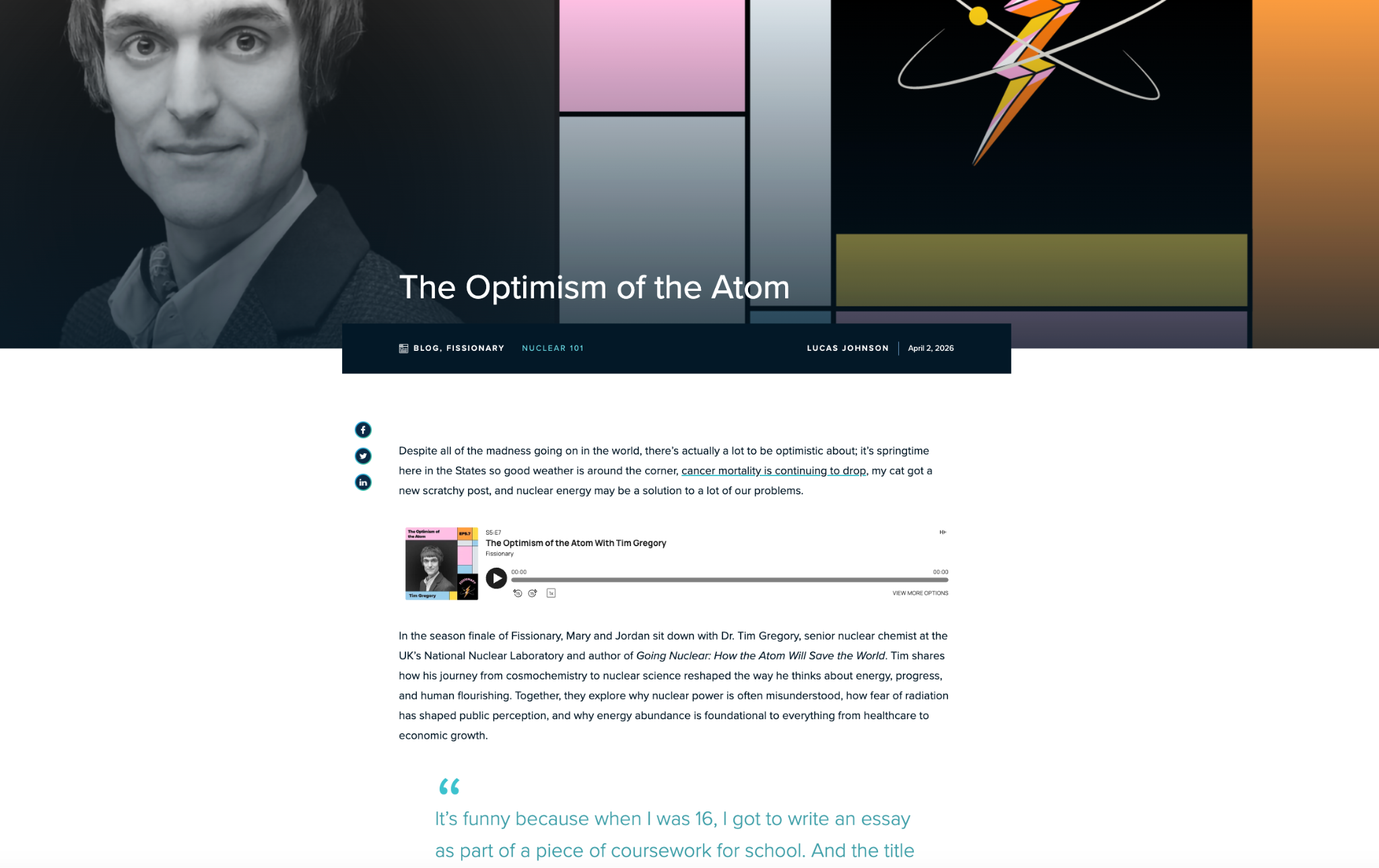
Either way, you've just created another indexable page built around the exact keywords your audience is searching, plus a fresh URL for Google to crawl and rank. Fissionary does a great job of this, turning episodes into supporting articles that pull in search traffic on their own.
And you don’t need to stop at blog posts. You can write up extended interviews with podcast guests or even put together a gated report from your podcast content. This helps fill your podcast landing page with valuable, stand-alone content and drives traffic to your page. The numbers back this up, with 94% of marketers repurposing their content, and SEMrush ranking updating and repurposing existing content as the second most effective tactic for driving traffic and leads.

Incorporate keywords strategically

Keywords are the bridge between what you publish and what your audience types into a search bar. They signal to search engines like Google and listening apps like Spotify what your show is actually about, so the right people can find it. And ranking is worth the effort, because the rewards are brutally top-heavy: The #1 organic result on Google takes 27.6% of clicks, while the entire second page pulls just 0.63%.

Your landing page gives those keywords somewhere to live. Weave them, naturally, into the places that carry the most weight: Your show title and description, every episode title and description, your show notes, and complementary blogs. 

Our sister company, CoHost, has a complete post dedicated to podcast keywords we suggest checking out to get the full picture, but for now, we’ve outlined a few principles to keep in mind when creating content for your podcast landing page:

  • Mix long-tail and short-tail: Short-tail keywords ("business podcast") are broad and fiercely competitive. Long-tail keywords ("podcast marketing tips for B2B brands") have lower search volume but attract a far more qualified listener and are much easier to rank for. Use both: Short-tail to build awareness over time, long-tail to bring in the right people faster.
  • Write for intent: Think about why someone is searching, not only what they typed. "True crime cold cases" and "true crime comedy" are the same genre and have completely different intent. Match your keywords to what your episode actually delivers.
  • Claim your brand terms: Your show name and host are keywords too. Use them consistently across your page, descriptions, and marketing so you own every search for your own show. Call Her Daddy is the gold standard here: It owns everything tied to the name and the host.
  • Don't keyword stuff: There is, in fact, too much of a good thing. Using too many keywords reads as spammy to humans and actually harms your performance with search engines as well.

Should your branded podcast page live on your company site or an external website?

Now that you understand why podcast landing pages are a non-negotiable, let’s move into another popular question you’ve probably been asking yourself: Should the page live inside your existing brand website, or should the podcast get its own standalone site?

Normally, our team recommends an internal page on your existing domain. We’d only suggest creating an external site for your show if the podcast already has a large, established following of its own, or because the brand has strict rules that make linking out to listening platforms a headache. 

But in almost every other case, your podcast should live alongside your other content. Here's why:

  • It inherits your site's SEO and traffic: This is the big one. A page on your existing domain rides the authority you've already built, so it doesn't have to claw its way onto page one of Google from scratch. It reaps the benefit of every backlink, every ranking, and every paid campaign your main site already runs. A separate domain starts at zero.
  • It keeps people on your site: An internal page makes it effortless to link the show from related blogs, press releases, and resources, and to point listeners toward your other content without ever sending them away. Lower bounce, more pages per visit, more chances to convert.
  • It's easier to keep on-brand: When the page lives on your existing site, staying inside brand guidelines is the default, not a separate project.

With that said, you may want to consider a standalone site for your branded podcast if:

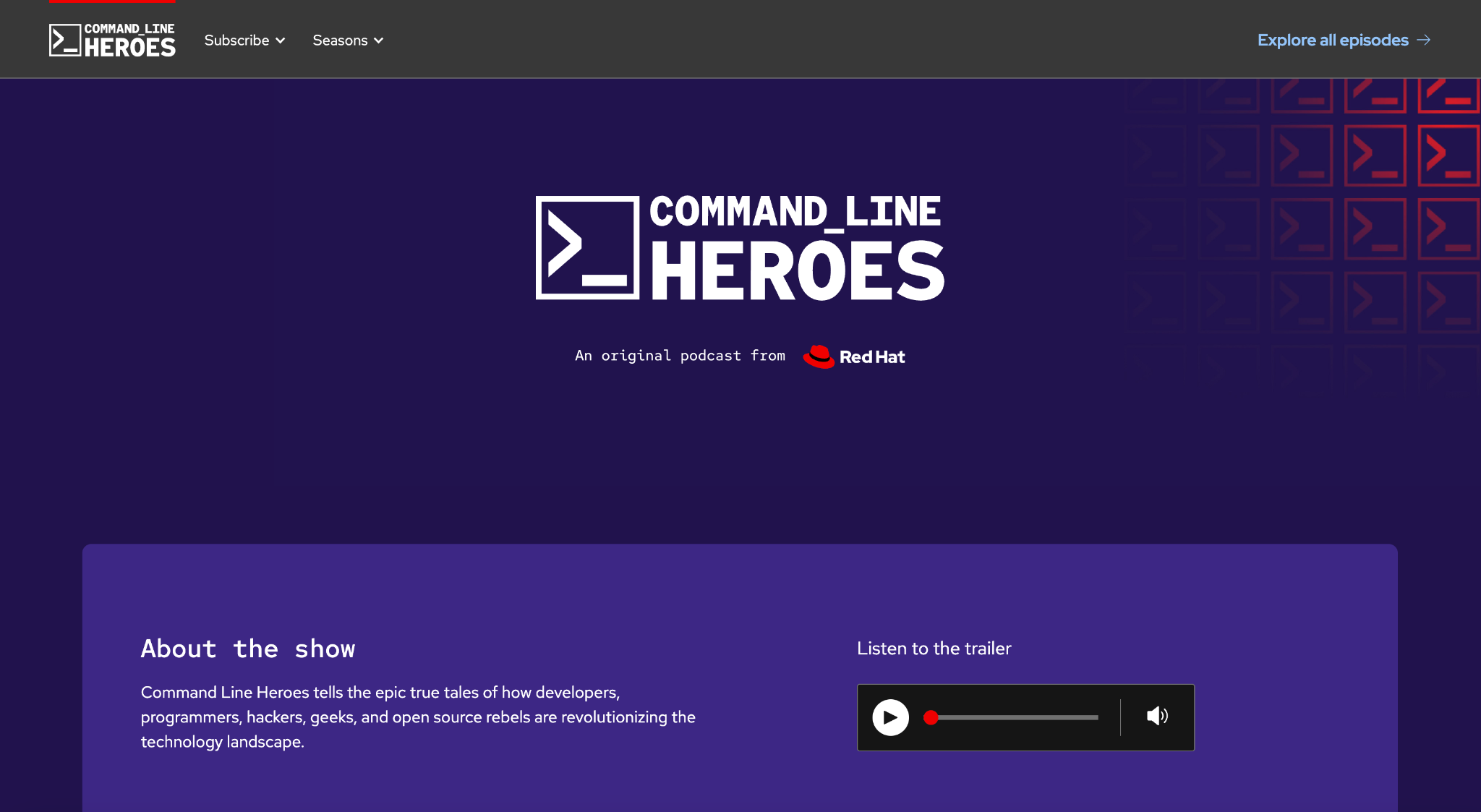
  • The show already has its own following and identity: If the podcast has grown into a brand of its own, a dedicated site can give it room to breathe. Red Hat's Command Line Heroes, which ran for nine seasons, is a great example: Clearly a Red Hat production, but with an aesthetic and audience distinct from the parent brand.
  • Your brand's website rules are too restrictive: If your company forbids linking out to third-party platforms or has rigid templates that won't accommodate a podcast, an external site is likely the pragmatic choice.

Quill tip: A standalone site with no clear owner goes stale fast, and outdated branding or dead links are something your audience absolutely notices. Only commit to an external site if you have the resources to keep it current after launch.

What belongs on a branded podcast landing page

If you've built landing pages before, you already know the fundamentals: A clear header, concise copy, on-brand visuals, a logical flow, and obvious CTAs. We won't dwell on those. Instead, here are the podcast-specific elements that actually move the needle, the ones brands most often miss:

  • An embedded media player: Apple, Spotify, and CoHost all give you embed codes so people can listen right on your page. It removes friction (no app, no leaving your site), and web listening is more real than people assume, with 13% of listeners tuning in on a desktop or laptop. 
  • An episode library with individual episode pages: Put every past episode in one easy-to-find place, and give each episode its own page with its own title, description, transcript, and supporting content. Each of those pages is a fresh entry point for search and another place to deep-link from your other content.
  • Listen-on badges: One-click buttons to Apple, Spotify, and other major players. Keep it to the top few platforms so you're helping people choose, not overwhelming them.
  • Guest submission form (if you're interview-based): Let prospective guests pitch themselves, and spell out who you're looking for and what they need to provide. It turns your page into a quiet guest-sourcing pipeline.
  • Easy social sharing: Make it effortless for a listener to pass an episode along. Social media is where most new listeners discover shows, so make sure to remove all hurdles to sharing.

How to tell if your branded podcast landing page is working

Too many brands build the page, hit publish, and never look at it again (which means they have no idea whether it's pulling listeners in or quietly doing nothing).

But the good news is that a landing page leaves a clear data trail the moment people start arriving, and you don't need a complicated dashboard to read it. Here are six signals worth watching:

  • Organic search traffic: Are new people finding your page through Google on their own? Watch organic visits and keyword rankings tick up month over month, especially on your episode pages and transcripts. (If you went internal, this should climb faster, since the page rides your main domain's authority instead of starting from zero.)
  • On-page engagement (time on page and bounce rate): Once someone lands, do they stick around or click away? A healthy page keeps people poking around, sampling your content, and clicking through to other pages on your site or to listening apps. 
  • Plays on your embedded player. If you've got a media player on your podcast’s page, look into how many visitors actually pressed play and how far they got.
  • Clicks to listening apps: Tag your listen-on badges so you can see how many people click through to subscribe in their app of choice. Think of this as the hand-off metric; it tells you whether your page is successfully sending casual visitors off to become real subscribers, and which platforms they actually prefer.

Quill tip: Want to see how many people are actually tuning into your podcast from your show’s landing page? CoHost’s Tracking Links can tell you. Generate a unique URL for each promotion channel and track clicks all the way through to downloads, so the next time leadership asks what's driving growth, you have a real answer.

Branded podcast landing pages we love

You also want to ensure that your landing page is cohesive with the rest of your content. Here are some examples of effective podcast landing pages that inspire:

Expedia’s Powering Travel 

Type: Internal landing page
Why we love it: 

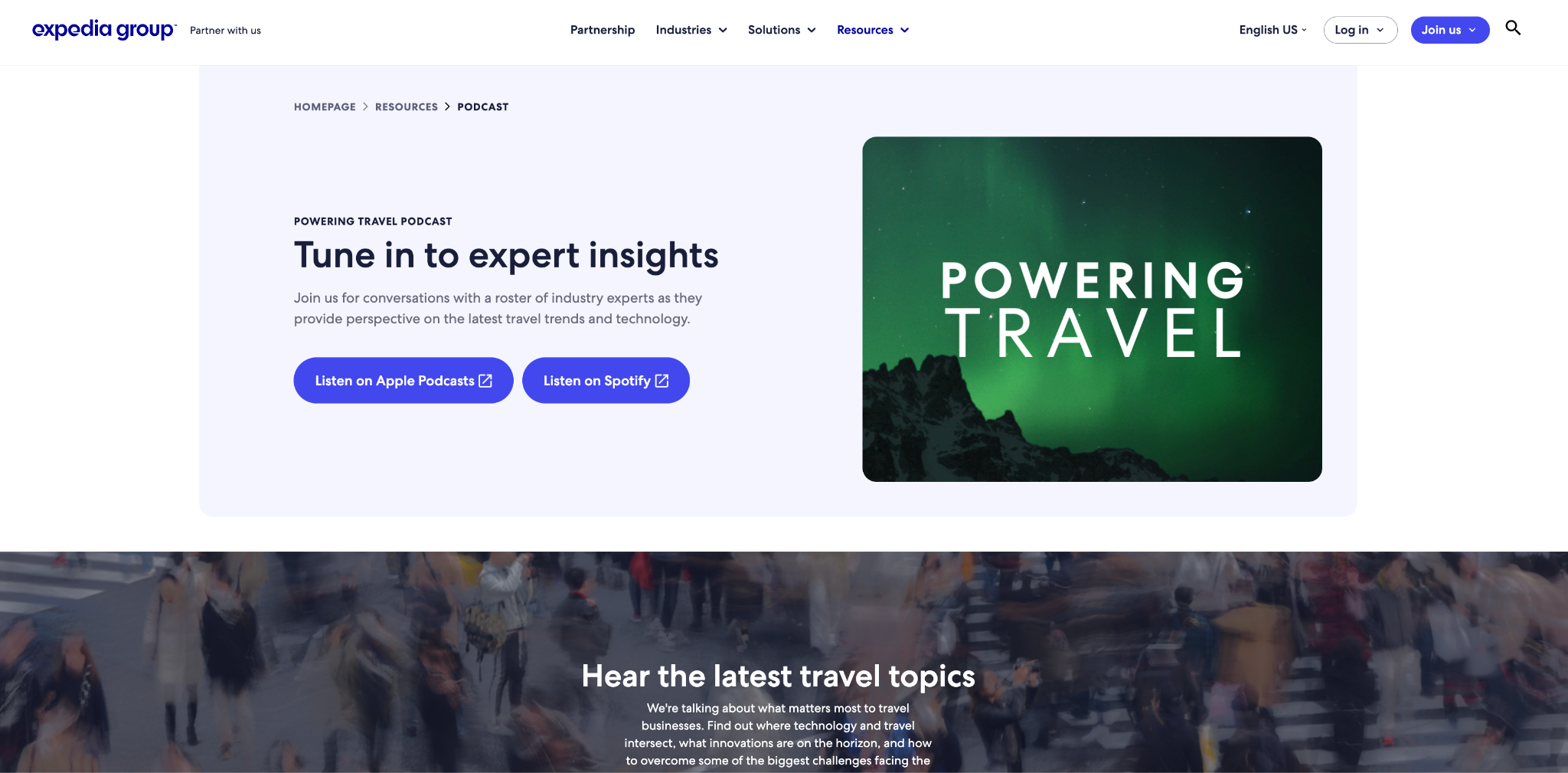
The page opens with a clear hero and a one-line promise ("conversations with a roster of industry experts"), then hands you listen-on buttons for Apple and Spotify right away, making listening easy. The detail we love most is that you can filter episodes by industry (airlines, hotels, vacation rentals) and topic, so a busy listener can jump straight to the conversation that's relevant to them instead of scrolling the whole feed.

Amdocs’ The Great Indoors

Type: Internal landing page
Why we love it:
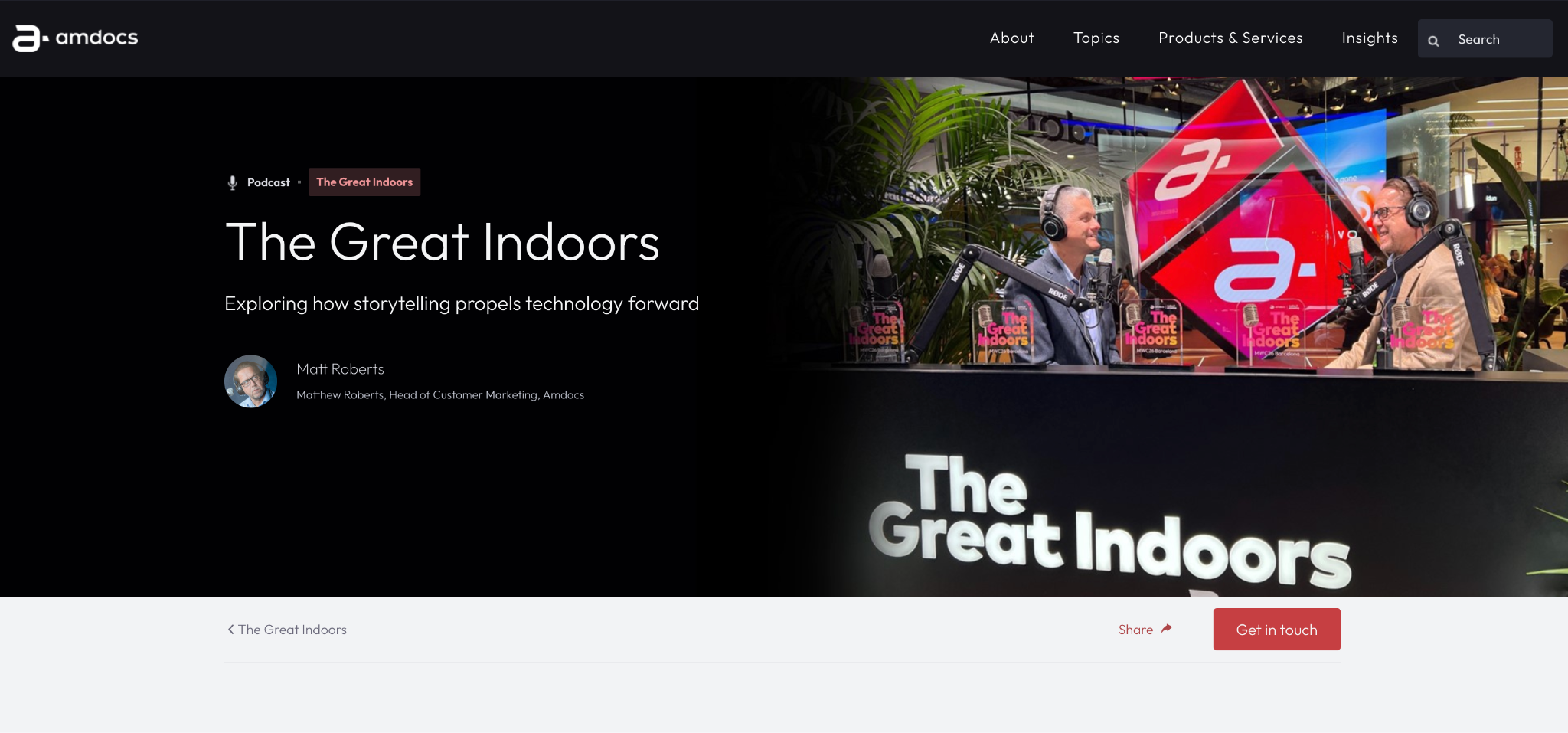
Amdocs organises everything into clean sections and gives every episode its own dedicated page rather than dumping them all in one list. That structure does double duty: It's great for SEO (each episode is a fresh, indexable page) and it gives guests a polished link to share with their own networks, which quietly extends the show's reach.

Charles Schwab’s Choiceology 

Type: Internal landing page
Why we love it:

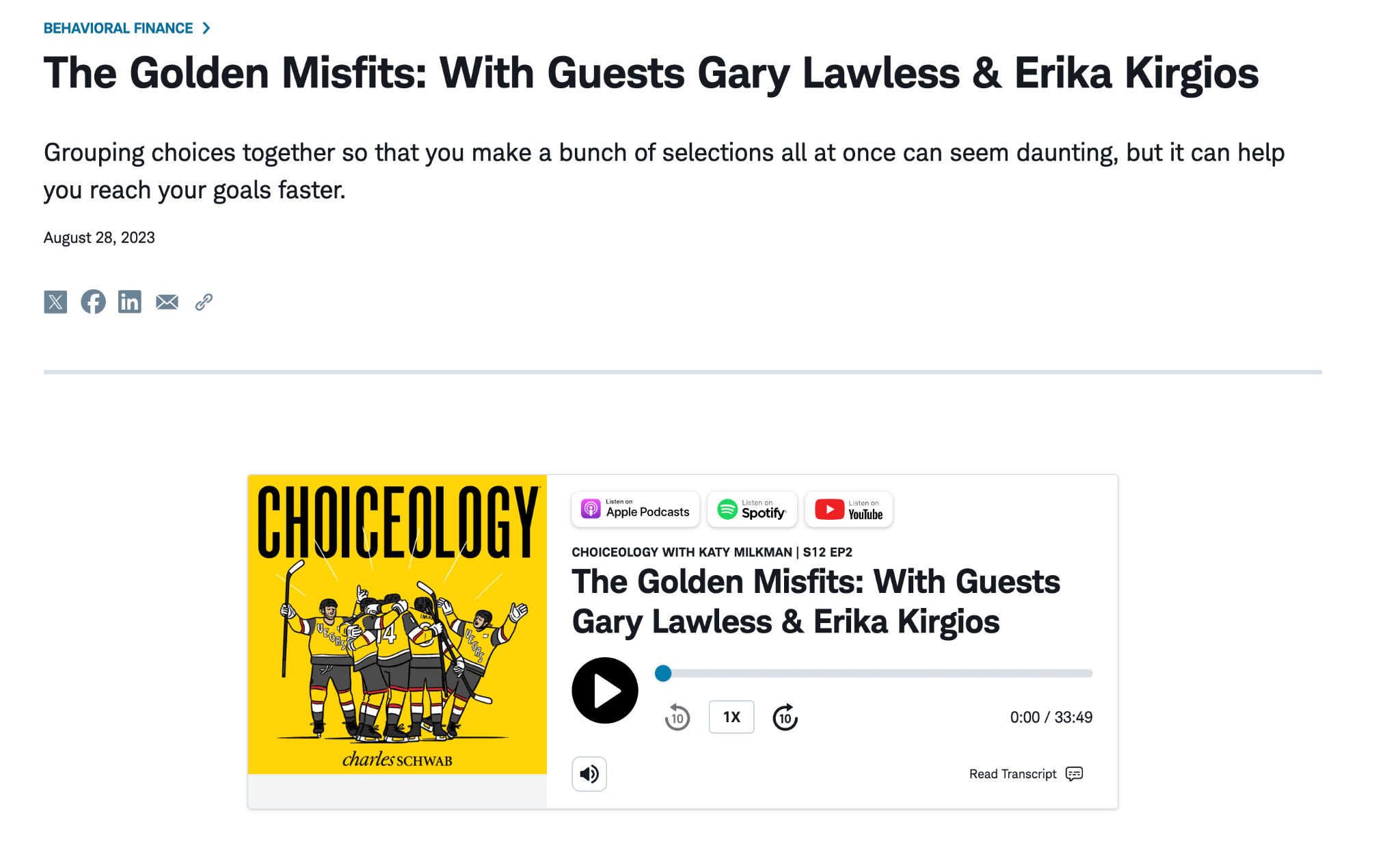
Choiceology pairs each episode with recommended readings and resources tied to that episode's behavioural-economics insight. It's a smart way to keep curious listeners engaged after the audio ends, and it threads the podcast into Schwab's broader content world instead of leaving it stranded on its own.

Red Hat’s Command Line Heroes 

Type: External landing page
Why we love it: 

Each of its seasons gets its own custom-illustrated artwork and a dark, developer-forward look that feels nothing like a corporate site, so the show reads as its own while the "an original podcast from Red Hat" line keeps the brand connection clear. It even extends past audio into open-source games inspired by the show, turning passive listeners into an actual community.

FAQ: Branded podcast landing pages

Does my branded podcast really need a landing page?

Yes. It's the only home for your show that you fully own and control, and the only version search engines and new listeners can actually read (they can't crawl your audio, but they can crawl a page). A landing page improves discoverability through SEO and builds credibility with listeners and prospective guests,

Should my podcast page live on my website or on its own separate site?

For most brands, build it internally on your existing domain. An internal page inherits your site's SEO authority, traffic, and credibility, keeps listeners on your site, and is easier to keep on-brand and accessible. A separate, external site makes sense in a few specific cases. For example, when the show already has a large following and its own identity, or when your brand's website rules are too restrictive.

Do podcast transcripts actually help SEO?

Yes, as long as you publish them as text on the page rather than as a downloadable PDF (search engines struggle to read PDFs). On-page transcripts give search engines thousands of additional words to index, help you rank for long-tail keywords, and make your show accessible to people who are deaf or hard of hearing.

What should I include on a podcast landing page?

Beyond the usual landing page fundamentals (clear header, concise copy, on-brand visuals, strong CTA), include the podcast-specific elements, like an embedded media player, an episode library with a dedicated page for each episode, listen-on badges for the major platforms, on-page transcripts, easy social sharing, and a guest submission form if your show is interview-based. 

When should I build my podcast landing page?

Before you launch, not after. Decide on your page approach as part of your launch strategy so it's not a rushed, last-minute scramble once the show is already live on listening apps. Your landing page is your podcast's home base, and you want it ready to greet your very first wave of listeners.

Get your show search engine ready

Most brands spend months producing their podcast to perfection, just to spend about half an hour on the landing page where people are supposed to find it. That's the gap this guide exists to close, because a landing page isn't just a nice-to-have. It's the one-stop shop for everything related to your series. 

The good news is you don't have to overhaul everything at once. Start with the non-negotiables. Get the page on your existing domain, embed a media player, add listen-on badges, and write a few lines about your podcast. Those four things alone will put you ahead of most branded shows out there.

Once that foundation is in place, the page starts doing real work for you. Publish your transcripts as on-page text, and search engines finally have something to read. Add individual episode pages, and you've quietly built a library of indexable content that earns traffic long after each episode airs. 

Want more where this came from? Subscribe to The Branded Podcaster, our bi-weekly newsletter, for practical tactics on producing, growing, and measuring branded podcasts, delivered straight to your inbox. 

Share

About the author

Tianna Marinucci is a content creation and digital marketing specialist. She graduated from McGill University in 2021 and has since worked in a variety of industries from interior design to technology.

After traveling to more than 60 countries and working in three, she is inspired by diverse cultures and motivated by unique experiences.

In her spare time, Tianna loves trying new foods, going to concerts, and learning more about history and socio-economics through books and podcasts.
More Like This

Branded Podcasts

A Marketer’s Complete Guide to Branded Podcast Landing Pages

Last updated on: 
June 26, 2026

Optimize your branded show's online presence with our complete guide to podcast landing pages. Learn how to create compelling landing pages that captivate your audience and boost engagement.

So, you've launched a branded podcast (or you're about to), and the same question keeps coming up: Does the show actually need its own landing page or website?

Short answer: Yes. 

Longer answer (and the reason this guide exists): A great landing page is the difference between a show people stumble across and a show people can actually find, follow, and come back to. 

Think of your landing page as your podcast's storefront. It's where a curious listener decides whether to hit play, where a prospective guest checks that you're legitimate, and where search engines finally get something to read (they can't listen to your audio, but they can absolutely crawl a well-built page). 

Get it right, and the page quietly works for you around the clock. Get it wrong, or skip it, and you're leaving reach, credibility, and SEO on the table.

We've built hundreds of podcasts (and podcast landing pages) for global brands, and the same handful of decisions come up every time. This guide walks through all of them,  including whether you need a page, where it should live, what belongs on it, how to let your goals drive the build, and (the part most teams skip) how to tell if the thing is actually working.

TL;DR:

  • Yes, you need a podcast landing page: It’s the central hub for your show, the one place you fully control, and the main version of your podcast that search engines read.
  • It's a discoverability engine, not a brochure: On-page transcripts, episode pages, and smart titles turn your show into crawlable content that earns search traffic on its own.
  • Don’t skip out on extra elements: Include an embedded player, an episode library with individual episode pages, listen-on badges, guest submissions, and more. 
  • Don’t set it and forget it: Measure organic traffic, player plays, click-throughs to listening apps, and conversions. 
  • Don't rush it: Your landing page belongs in your launch plan, not as an afterthought once the show is already live.

So, why do you need a podcast landing page anyway?

A landing page is where all things related to your podcast live. It's the central place where listeners find how to subscribe, the resources you mentioned in an episode, and the supporting content (blogs, infographics, video, etc.) that surrounds the show.

Here's the part that makes it non-negotiable: It's the only version of your podcast you fully own and fully control. Your show lives on Apple, Spotify, and YouTube at the mercy of their algorithms and their rules. Your landing page answers to you. If a platform changes its policy or buries your category tomorrow, your page is still standing, still indexed, still sending people to your episodes. 

But owning your show's home is just the start. A polished page also positions your brand as a thought leader, which is a big part of why most brands launch a podcast in the first place: To be seen as the authority in their space. A professional landing page reinforces that, while a show with no home (or a half-finished page) quietly undercuts it. 

Plus, landing pages also help you land better guests. Prospective guests regularly ask for proof that the show is genuinely affiliated with the brand, and a real landing page settles it instantly. It signals the show is legitimate, established, and worth their time, which makes a busy executive far more likely to say yes. 

And of course, a well-done landing page improves accessibility, boosts visibility, and extends reach. We dive into those more below:

Podcast landing pages are key for discoverability 

As you likely already know, search engines can't listen to your episodes. They can only read text. This makes your podcast landing page a crucial part of how your podcast is crawled, indexed, and surfaced on Google, Bing, you name it. 

Here are some crucial elements you should be including on your podcast landing page to maximize SEO:

Publish transcripts on the page, not as a PDF

This is one of the most common mistakes brands make. They transcribe their episodes (good) and then upload them as a downloadable PDF (not good). Search engines don't read text trapped in a PDF the way they read text on a page, so all that SEO value is lost.

Instead, publish the transcript directly on the page, formatted like a blog post, ideally with each episode's transcript living on its own dedicated page. 99% Invisible does this beautifully. 

And transcripts pull double duty: They make your show accessible to people who are deaf or hard of hearing, and to the many listeners who'd simply rather skim than press play.

You may be thinking: 

Apple and Spotify now auto-generate transcripts inside their own apps, so why do I need them on my own site? Because these transcripts live on Apple and Spotify, not on your site, they do nothing for your search rankings. Publishing the transcript on your own page is how you actually capture that search value instead of handing it to a platform. 

Repurpose episodes into written content

For every episode you publish, write a companion article and post it on your site. It can be a deep dive on a single point the conversation raised, a straight recap of the episode, or a piece that extends the discussion.

Either way, you've just created another indexable page built around the exact keywords your audience is searching, plus a fresh URL for Google to crawl and rank. Fissionary does a great job of this, turning episodes into supporting articles that pull in search traffic on their own.

And you don’t need to stop at blog posts. You can write up extended interviews with podcast guests or even put together a gated report from your podcast content. This helps fill your podcast landing page with valuable, stand-alone content and drives traffic to your page. The numbers back this up, with 94% of marketers repurposing their content, and SEMrush ranking updating and repurposing existing content as the second most effective tactic for driving traffic and leads.

Incorporate keywords strategically

Keywords are the bridge between what you publish and what your audience types into a search bar. They signal to search engines like Google and listening apps like Spotify what your show is actually about, so the right people can find it. And ranking is worth the effort, because the rewards are brutally top-heavy: The #1 organic result on Google takes 27.6% of clicks, while the entire second page pulls just 0.63%.

Your landing page gives those keywords somewhere to live. Weave them, naturally, into the places that carry the most weight: Your show title and description, every episode title and description, your show notes, and complementary blogs. 

Our sister company, CoHost, has a complete post dedicated to podcast keywords we suggest checking out to get the full picture, but for now, we’ve outlined a few principles to keep in mind when creating content for your podcast landing page:

  • Mix long-tail and short-tail: Short-tail keywords ("business podcast") are broad and fiercely competitive. Long-tail keywords ("podcast marketing tips for B2B brands") have lower search volume but attract a far more qualified listener and are much easier to rank for. Use both: Short-tail to build awareness over time, long-tail to bring in the right people faster.
  • Write for intent: Think about why someone is searching, not only what they typed. "True crime cold cases" and "true crime comedy" are the same genre and have completely different intent. Match your keywords to what your episode actually delivers.
  • Claim your brand terms: Your show name and host are keywords too. Use them consistently across your page, descriptions, and marketing so you own every search for your own show. Call Her Daddy is the gold standard here: It owns everything tied to the name and the host.
  • Don't keyword stuff: There is, in fact, too much of a good thing. Using too many keywords reads as spammy to humans and actually harms your performance with search engines as well.

Should your branded podcast page live on your company site or an external website?

Now that you understand why podcast landing pages are a non-negotiable, let’s move into another popular question you’ve probably been asking yourself: Should the page live inside your existing brand website, or should the podcast get its own standalone site?

Normally, our team recommends an internal page on your existing domain. We’d only suggest creating an external site for your show if the podcast already has a large, established following of its own, or because the brand has strict rules that make linking out to listening platforms a headache. 

But in almost every other case, your podcast should live alongside your other content. Here's why:

  • It inherits your site's SEO and traffic: This is the big one. A page on your existing domain rides the authority you've already built, so it doesn't have to claw its way onto page one of Google from scratch. It reaps the benefit of every backlink, every ranking, and every paid campaign your main site already runs. A separate domain starts at zero.
  • It keeps people on your site: An internal page makes it effortless to link the show from related blogs, press releases, and resources, and to point listeners toward your other content without ever sending them away. Lower bounce, more pages per visit, more chances to convert.
  • It's easier to keep on-brand: When the page lives on your existing site, staying inside brand guidelines is the default, not a separate project.

With that said, you may want to consider a standalone site for your branded podcast if:

  • The show already has its own following and identity: If the podcast has grown into a brand of its own, a dedicated site can give it room to breathe. Red Hat's Command Line Heroes, which ran for nine seasons, is a great example: Clearly a Red Hat production, but with an aesthetic and audience distinct from the parent brand.
  • Your brand's website rules are too restrictive: If your company forbids linking out to third-party platforms or has rigid templates that won't accommodate a podcast, an external site is likely the pragmatic choice.

Quill tip: A standalone site with no clear owner goes stale fast, and outdated branding or dead links are something your audience absolutely notices. Only commit to an external site if you have the resources to keep it current after launch.

What belongs on a branded podcast landing page

If you've built landing pages before, you already know the fundamentals: A clear header, concise copy, on-brand visuals, a logical flow, and obvious CTAs. We won't dwell on those. Instead, here are the podcast-specific elements that actually move the needle, the ones brands most often miss:

  • An embedded media player: Apple, Spotify, and CoHost all give you embed codes so people can listen right on your page. It removes friction (no app, no leaving your site), and web listening is more real than people assume, with 13% of listeners tuning in on a desktop or laptop. 
  • An episode library with individual episode pages: Put every past episode in one easy-to-find place, and give each episode its own page with its own title, description, transcript, and supporting content. Each of those pages is a fresh entry point for search and another place to deep-link from your other content.
  • Listen-on badges: One-click buttons to Apple, Spotify, and other major players. Keep it to the top few platforms so you're helping people choose, not overwhelming them.
  • Guest submission form (if you're interview-based): Let prospective guests pitch themselves, and spell out who you're looking for and what they need to provide. It turns your page into a quiet guest-sourcing pipeline.
  • Easy social sharing: Make it effortless for a listener to pass an episode along. Social media is where most new listeners discover shows, so make sure to remove all hurdles to sharing.

How to tell if your branded podcast landing page is working

Too many brands build the page, hit publish, and never look at it again (which means they have no idea whether it's pulling listeners in or quietly doing nothing).

But the good news is that a landing page leaves a clear data trail the moment people start arriving, and you don't need a complicated dashboard to read it. Here are six signals worth watching:

  • Organic search traffic: Are new people finding your page through Google on their own? Watch organic visits and keyword rankings tick up month over month, especially on your episode pages and transcripts. (If you went internal, this should climb faster, since the page rides your main domain's authority instead of starting from zero.)
  • On-page engagement (time on page and bounce rate): Once someone lands, do they stick around or click away? A healthy page keeps people poking around, sampling your content, and clicking through to other pages on your site or to listening apps. 
  • Plays on your embedded player. If you've got a media player on your podcast’s page, look into how many visitors actually pressed play and how far they got.
  • Clicks to listening apps: Tag your listen-on badges so you can see how many people click through to subscribe in their app of choice. Think of this as the hand-off metric; it tells you whether your page is successfully sending casual visitors off to become real subscribers, and which platforms they actually prefer.

Quill tip: Want to see how many people are actually tuning into your podcast from your show’s landing page? CoHost’s Tracking Links can tell you. Generate a unique URL for each promotion channel and track clicks all the way through to downloads, so the next time leadership asks what's driving growth, you have a real answer.

Branded podcast landing pages we love

You also want to ensure that your landing page is cohesive with the rest of your content. Here are some examples of effective podcast landing pages that inspire:

Expedia’s Powering Travel 

Type: Internal landing page

Why we love it: 

The page opens with a clear hero and a one-line promise ("conversations with a roster of industry experts"), then hands you listen-on buttons for Apple and Spotify right away, making listening easy. The detail we love most is that you can filter episodes by industry (airlines, hotels, vacation rentals) and topic, so a busy listener can jump straight to the conversation that's relevant to them instead of scrolling the whole feed.

Amdocs’ The Great Indoors

Type: Internal landing page

Why we love it:
Amdocs organises everything into clean sections and gives every episode its own dedicated page rather than dumping them all in one list. That structure does double duty: It's great for SEO (each episode is a fresh, indexable page) and it gives guests a polished link to share with their own networks, which quietly extends the show's reach.

Charles Schwab’s Choiceology 

Type: Internal landing page

Why we love it:

Choiceology pairs each episode with recommended readings and resources tied to that episode's behavioural-economics insight. It's a smart way to keep curious listeners engaged after the audio ends, and it threads the podcast into Schwab's broader content world instead of leaving it stranded on its own.

Red Hat’s Command Line Heroes 

Type: External landing page

Why we love it: 

Each of its seasons gets its own custom-illustrated artwork and a dark, developer-forward look that feels nothing like a corporate site, so the show reads as its own while the "an original podcast from Red Hat" line keeps the brand connection clear. It even extends past audio into open-source games inspired by the show, turning passive listeners into an actual community.

FAQ: Branded podcast landing pages

Does my branded podcast really need a landing page?

Yes. It's the only home for your show that you fully own and control, and the only version search engines and new listeners can actually read (they can't crawl your audio, but they can crawl a page). A landing page improves discoverability through SEO and builds credibility with listeners and prospective guests,

Should my podcast page live on my website or on its own separate site?

For most brands, build it internally on your existing domain. An internal page inherits your site's SEO authority, traffic, and credibility, keeps listeners on your site, and is easier to keep on-brand and accessible. A separate, external site makes sense in a few specific cases. For example, when the show already has a large following and its own identity, or when your brand's website rules are too restrictive.

Do podcast transcripts actually help SEO?

Yes, as long as you publish them as text on the page rather than as a downloadable PDF (search engines struggle to read PDFs). On-page transcripts give search engines thousands of additional words to index, help you rank for long-tail keywords, and make your show accessible to people who are deaf or hard of hearing.

What should I include on a podcast landing page?

Beyond the usual landing page fundamentals (clear header, concise copy, on-brand visuals, strong CTA), include the podcast-specific elements, like an embedded media player, an episode library with a dedicated page for each episode, listen-on badges for the major platforms, on-page transcripts, easy social sharing, and a guest submission form if your show is interview-based. 

When should I build my podcast landing page?

Before you launch, not after. Decide on your page approach as part of your launch strategy so it's not a rushed, last-minute scramble once the show is already live on listening apps. Your landing page is your podcast's home base, and you want it ready to greet your very first wave of listeners.

Get your show search engine ready

Most brands spend months producing their podcast to perfection, just to spend about half an hour on the landing page where people are supposed to find it. That's the gap this guide exists to close, because a landing page isn't just a nice-to-have. It's the one-stop shop for everything related to your series. 

The good news is you don't have to overhaul everything at once. Start with the non-negotiables. Get the page on your existing domain, embed a media player, add listen-on badges, and write a few lines about your podcast. Those four things alone will put you ahead of most branded shows out there.

Once that foundation is in place, the page starts doing real work for you. Publish your transcripts as on-page text, and search engines finally have something to read. Add individual episode pages, and you've quietly built a library of indexable content that earns traffic long after each episode airs. 

Want more where this came from? Subscribe to The Branded Podcaster, our bi-weekly newsletter, for practical tactics on producing, growing, and measuring branded podcasts, delivered straight to your inbox. 

Tianna Marinucci

Content Marketing Specialist

Tianna Marinucci is a content creation and digital marketing specialist. She graduated from McGill University in 2021 and has since worked in a variety of industries from interior design to technology.

After traveling to more than 60 countries and working in three, she is inspired by diverse cultures and motivated by unique experiences.

In her spare time, Tianna loves trying new foods, going to concerts, and learning more about history and socio-economics through books and podcasts.
Platform
Price
Pro’s
Con's
Anchor

Free

  • Easy to use
  • Automatically distributes your podcast to major platforms.
  • Embed media player.
  • Great if podcasting is a
    side hobby
  • Very basic editing
  • Since it’s a free tool, you don’t have full control over the monetization of your podcast.
  • Not the right platform for people taking podcasting seriously
Buzzsprout

Free for 2 hours of content per month

$12 for 3 hours per month

$18+ for 6 hours and up

  • Very user-friendly
  • Caters to both long term and beginner podcasters
  • Advanced analytics
  • Easy distribution of your episodes
  • They measure their size requirements to hours not megabytes
  • Bonus: get a free $20 Amazon gift card when you sign up for any paid hosting plan!
  • Advanced features like dynamic ad insertion need some work
Libsyn

$5/month for Monthly Storage 50mb

  • Oldest podcast hosting site.
  • Easy distribution to major platforms and great for scaling once your podcast gets bigger.
  • Hosted over 35,000 podcasts.
  • An iTunes Podcast partner.
  • Allows you to publish your podcast to specific directories.
  • Embed media player.
  • Price is based on storage
  • 50mb storage for $5 won’t be enough if you are publishing weekly so you’ll end up with a higher price point
Podbean

Unlimited audio package: $9/month

Storage space:

Unlimited

  • Great support & customer service features
  • Unlimited audio.
  • Pages are easy to customize
  • Can schedule podcast release dates.
  • Easy to use.
  • Uploads and changes to podcast titles and/or descriptions are automatic to Spotify.
  • Embed media player.
  • Simple Analytics
  • Analytics aren’t as advanced as other platforms
  • Upload and changes to podcast titles and/or descriptions take a day to change on iTunes.
  • Not an iTunes podcast partner.
  • The process to send a podcast to iTunes is more tedious. But, you will still be able to get on the platform.
Blubrry

Classic

$5/month

Monthly Storage

50mb

  • Podcast Wordpress plugin and management.
  • If you want to record a new introduction or conclusion, add in a sponsored ad or upload a new version of a podcast, it doesn't count towards your storage usage per month.
  • Blubrry allows a 25% storage overage each month
  • Prices are based on storage.
  • Usability is okay.
SimpleCast

Starting: $15/month

Recommendation: $35/month

Monthly Storage: Unlimited

  • Hosts your audio files no matter what the size!
  • Dynamic insertion for podcast ads or edits.
  • Incredibly detailed analytics including number of episodes completed and listener location tracking.
  • Embed media player.
  • Easy to use.
  • Great distribution! Easy access to all major podcast platforms.
  • Customizable podcast
    website.
  • Prices are slightly higher than other platforms, but well worth it especially if you have a branded company podcast!

Looking to generate reach, leads, and measurable results?

Chat with our experts about your podcast

chat with ouR team